


We knew students were unprepared, and we sent them on to fail


More than a thousand University of California faculty, led by Berkeley mathematicians, signed an open letter calling for a return to SAT/ACT testing for applicants to STEM majors. They say they're reteaching middle-school math to Calculus 1 students.
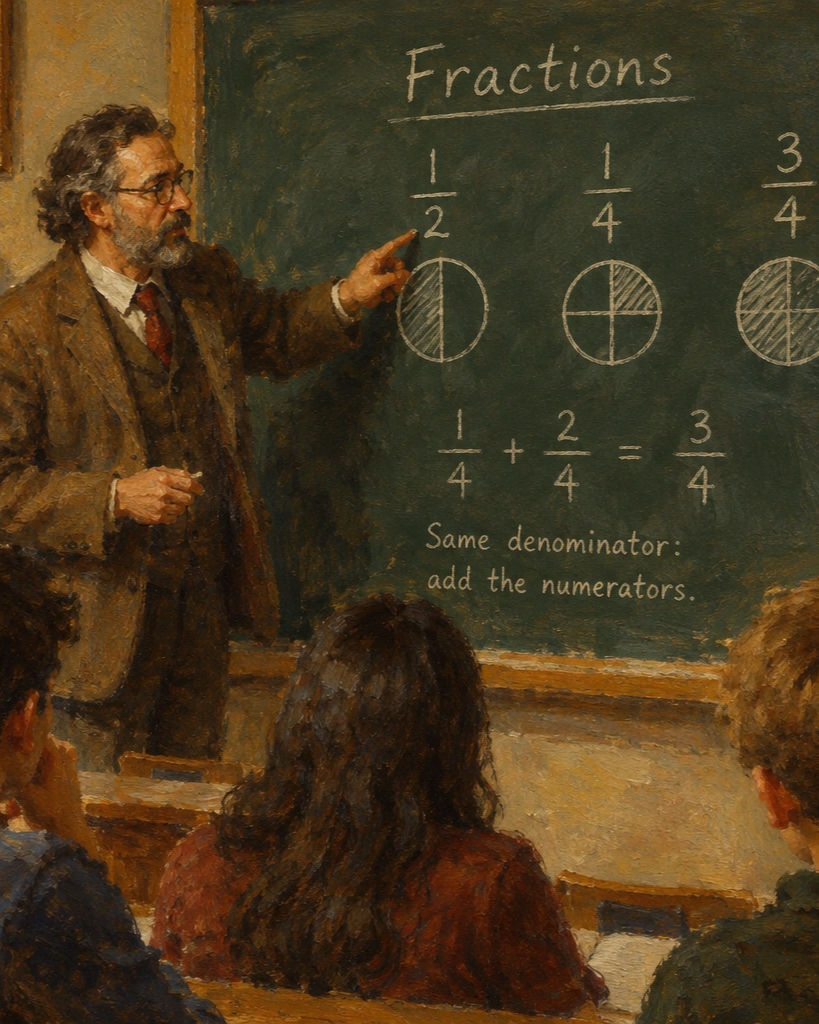
It's no surprise to Elizabeth Statmore, who teaches at San Francisco's Lowell High, the largest single feeder to the UC system. Every year, she finds herself teaching very basic math -- fractions, the distributive property, exponents and roots -- to her high-achieving students, she writes in Voice of San Francisco. These holes in their knowledge will sink them in college STEM classes.
"We knew," she concludes. "We had the data and we saw the problem, but we sent these students downstream along the conveyor belt anyway."
The education professors who train teachers and write state math frameworks are committed to access above all else, she writes. They fear test scores will be used to sort out disfavored students, as in the past. "Their solution has been to de-emphasize anything that might interfere with or delay a student’s arrival in a college calculus class."
But they're setting students up to fail, she writes. "A system that refuses to measure readiness ahead of time doesn’t spare the underprepared student a reckoning — it just guarantees that their reckoning will arrive after they have enrolled, borrowed against their degree, and discovered during week six of the term that the help they need now should have been given to them years ago."
Everyone agrees the learning gaps are real. The only dispute is whether or not we’re going to measure them.
In 2020, UC's Academic Senate convened a task force that concluded "test scores actually predicted success for students from disadvantaged backgrounds and could actually increase their admission rates — not lower them," Statmore writes. The Regents ignored the data and voted to make UC admissions test-blind. Even if applicants want to submit SAT or ACT scores, nobody will look at them.
The number of unprepared students has soared. Classes include calculus-ready students and students who are "functionally pre-algebraic," the faculty complains. Zvezdelina Stankova, who's taught math at Berkeley for nearly 30 years, described a recent calculus class. Twenty-five to 30 percent of students "were in free fall. There was nothing you could do for them.”
Ed schools' answer to students with wildly different levels of preparation is differentiation, writes Statmore. "Their argument is that if we credentialed math teachers were simply skilled enough, we’d be able to deliver meaningfully different instruction to all students in the same room at the same time — regardless of whether they are four grade levels apart." When the "magic thinking" doesn't work, they blame the teachers.
If Berkeley's math professors can't figure out how to "differentiate" with success, she writes, then don't expect K-12 teachers to do it."
Its Becoming Impossible To Know How Your Kids Are Doing in School, write Ariel Kalil, a public policy professor at Universith of Chicago, an Derek Rury, an Oregon State economics professor.
Nearly nine in 10 parents think their child is at or above grade level in reading and math, surveys show. Most are wrong. Only 28 percent of eighth-graders test as proficient in math, 30 percent in reading, according to federal data.
As schools inflate grades, they write, several states "have lowered the score a child needs to be deemed 'proficient,' producing big gains on paper without any change in the classroom."
"Standardized tests actually do measure important skills above and beyond what’s captured by grades and diplomas," writes Morgan Polikoff of USC's EdPolicy Hub. But parents put their faith in grades. "We probably need to do things like rethinking grading and report card policies, training teachers on new and better approaches to grading, and addressing the root causes that are encouraging poor grading behaviors (such as tremendous social pressures to give children good grades because people believe grades matter so much)."

When you've dug yourself into a hole, the first step is to stop digging. Student learning was much higher 15 years ago, and then we decided to stop doing what worked (NCLB). Why not go back to that and once we get back where we were, build on that success?
Manifeste recta dicis. People in this country don't seem to have any idea how to think about public education. They seem to be capable only of noticing symptoms (college kids having to review middle school math, in college, for instance) and incapable of examining root causes. Almost all of this ed-malaise is a direct result of the convergence of public education policy and the education educators receive at colleges of "Education." The whole system of pedagogy in the US is so rotten and has been for so long that it would be impossible to renovate it, even within a generation. We've made many choices on the way to becoming truly stupid, and burning it all down would just be a start…
Ration the grades. What Americans call "grades" would normally be called "marks" in British English, since the latter are internally assessed, while the former are externally reported after initial marks are scaled against grade boundaries (these are called "cut scores" in American English) that are moderated in order to maintain consistency over time: American teachers' unmoderated grading has become unreliable, and Governor Newsom's Regents removed alternative information from reaching admission officers, so the UC system's undergraduate accreditation should be reviewed, since admission to its campuses does not reliably certify the achievement of even basic education, much less the general ed regularly certified at the upper secondary level in Europe and Asia.
Don't forget that the pandemic caused students' school year to end suddenly, without anything like the full curriculum having been completed. No one said, "When schools reopen, we'll have to start where we left off," perhaps allowing students who chose to demonstrate their proficiency in a subject via exam. Having deprived them of necessary time at school, we should have offered to give them that time back. But I never saw this even hinted at, much less fully discussed. When they speak of "learning loss" from the pandemic, this is part of it.
Scholae publicae delendae sunt.
Sorry, but there seems no other cure.