


'Meet students where they are' -- and then what?


"'Meet students where they are' always, always, always seems to mean make things easier," tweets Daniel Buck. "How about instead we set high standards and raise students to them?"
At the college level, meeting students where they are means "expecting less and less from students and more and more from teachers," writes David C. Phillips, a North Carolina English teacher, for the Martin Center blog. Sadly, "where students are, academically, is quite simply not where they should be."
Most high-school graduates believe they're prepared for college, but "very few actually are," he writes. "Only 30 percent of 2025 high-school graduates nationwide met a minimum of three of the four benchmarks measuring college readiness in English, math, reading, and science" on the ACT.
In North Carolina, where only one-quarter of ACT takers pass three of four benchmarks, students with below-average ACT scores and mediocre high-school grades can qualify for UNC schools, Phillips, writes.
"Where they are" is way below the level needed to master college-level subject matter:
Unable to read lengthy texts—and unable to comprehend texts of virtually any length;
Unable to write clearly—and often unable to write correctly on a technical level, lacking knowledge of basic grammar and mechanics;
Lacking what used to be and should still be basic general knowledge—particularly regarding (American) history and civics;
Unwilling to devote more than a minimal amount of time and effort to studying.
"Colleges and universities must start expecting and demanding more of our students," he writes. Students "must take ownership of their education and responsibility for their success (or failure)."
College degrees will be worthless if these trends continue, writes Mark Horowitz, an associate professor of sociology at Seton Hall, in the Chronicle of Higher Education.
Close to half of professors in large public universities say academic standards have declined and grades have inflated in a 2023 survey of faculty."Almost 40 percent acknowledge routinely inflating grades; one-third admit to reducing the difficulty of their courses."
About half of the faculty members he surveyed "link eroding standards to declining student readiness," writes Horowitz. "Two in five would not be surprised if their university were graduating some functionally illiterate students!"
It is "not compassionate to saddle graduates with mountains of debt and minimal marketable skills, he concludes. As graduates with "junk degrees" compete with AI for jobs, employers are unlikely to “meet them where they are.”
It's impossible to teach math and science to students who can't do middle-school math, writes a community college STEM chair on Reddit. He meets "students who don’t show up for class most of the time, don’t turn in any assignments, earn grades below 50 on exams, and fail the course." The faculty is blamed for the high failure rate.
Another community college instructor writes: "If I were to 'meet the students where they are' I'd have to teach some of them to read, because they are functionally illiterate. Most of them cannot write a cohesive paragraph, either."


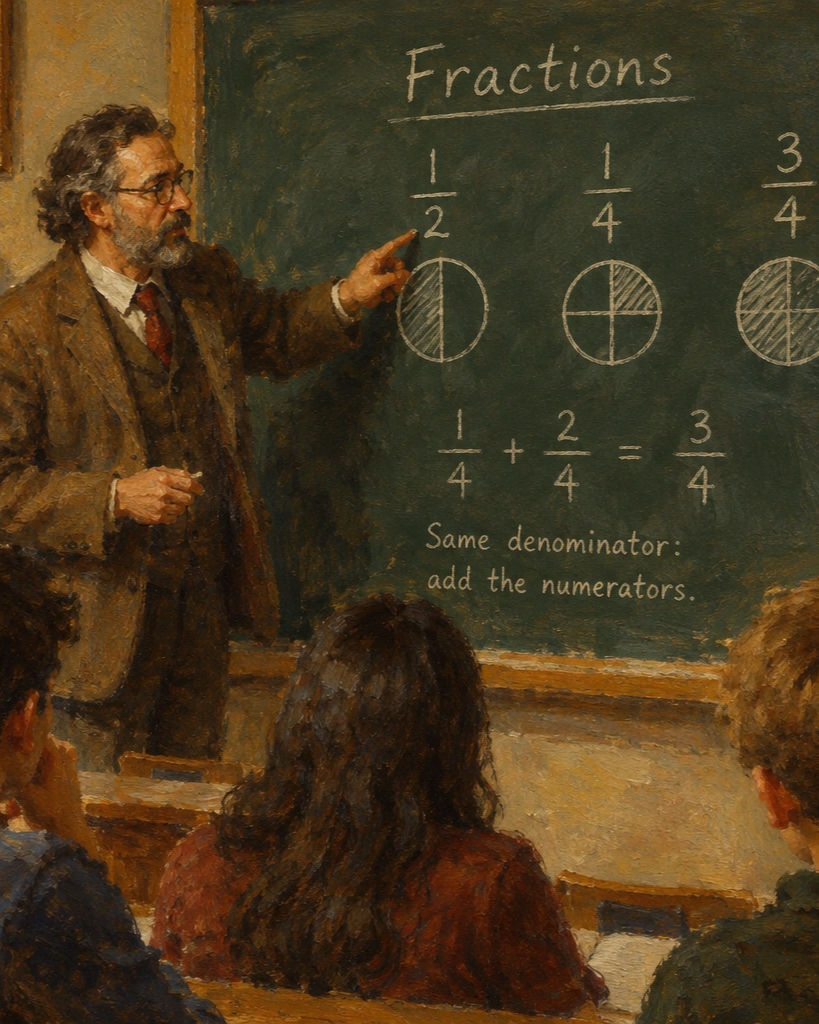
Colleges would demonstrate their academic freedom much better than they do today were they simply to refuse to admit academically unprepared and unqualified students. Instead, the colleges focus on "affordability" and a revenue maximization model that has lost much of its value as a college diploma -- not the same as a college education -- has lost much of its value. A model for failure: Admit without standards, grade without standards, and graduate without standards -- or an education.
Good article. I think I saw the link on Instapundit. I teach high school and we see the same thing. We get kids with minimal foundational math skills, minimal attention span, and minimal enthusiasm for anything requiring focus our thought. And then we're told we have to teach the kids we have, rather than the kids we'd like. Except that we created the kids we have through our elementary and middle school programs, and there seems to be no effort being made to fix that problems, just more of the things that led to the current situation. I try to maintain standards in my classroom, expecting students to come in and get extra help if they don't understand, rathe…