


Civics teachers 'don't know what they can and can't say'

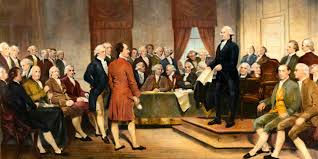
Teaching civics makes teachers nervous, concludes the Sandra Day O'Connor Institute in a new policy brief.
Many teachers "are insufficiently trained in both what to teach and how to teach it," says the institute. They fear controversy and try to avoid complexity. "Most state standards are vague, and district policies rarely provide the clarity needed to manage contentious topics."
Furthermore, there's no consensus on the purpose of civics classes. Is the goal to create informed citizens or activists?

"Fewer than half of K–12 social studies teachers express a 'fair amount' or 'great deal' of trust in foundational institutions such as the federal government, the judiciary, law enforcement, or the press," the institute observes. A 2024 study of elementary teacher trainees found those who had the least trust in American institutions were the most likely to plan civics lessons."Decisions to teach civics may stem more from personal mission than from shared professional preparation. While this passion can be admirable, it also raises the risk of ideologically driven instruction, especially in the absence of strong training, clear standards, or guiding norms."
Jen K. from Pennsylvania anchors questions in founding documents, not current politics. "Instead of asking, ‘Should the president do X?’ I ask, ‘Where does the president have the authority to do X according to Article II?’”
Many teachers carefully teach discussion skills to prepare students to talk about controversial topics later in the year.
Even experienced civics teachers are trying to avoid controversial topics, the O'Connor Institute found, writes Sarah Schwartz in Education Week.
In a survey of 24 teachers who participated in a summer program on the Constitution, three-quarters said they have “self-censored or avoided certain civics topics due to fear of pushback or controversy,” she notes.
"They just don’t know in this new environment what they can and can’t say.” said Liam Julian of the O’Connor Institute.
"Since January 2021, 20 states have restricted how teachers can discuss racism, sexism, or other issues perceived to be controversial in the classroom," writes Schwartz.
Holly Korbey, daughter of an eighth-grade history teacher, talks to middle and high-school teachers about how to teach the U.S. Constitution on The Bell Ringer. A common problem: Students don't have much background knowledge.


"Furthermore, there's no consensus on the purpose of civics classes. Is the goal to create informed citizens or activists?"
This shouldn't even be a question. Education is supposed to inform children, not train them for your preferred cause. They can't properly play the game if they don't know the rules of the game.
"A 2024 study of elementary teacher trainees found those who had the least trust in American institutions were the most likely to plan civics lessons."
It appears America has a huge population of teachers who are ignorant of basic civics knowledge and unqualified to either plan civics lessons or to teach them. It really is alarming. How, for instance, does any teacher instruct a class in American history if they themselves have no basic civics knowledge and understanding ?
One can only answer the question of whether the government can do something if one covers a long list of Supreme Court cases long with study advanced public policy.
Years ago, the sociologist David Reisman recommended that the pre-college curriculum not include Social Studies.
The State-monopoly school system creates this problem. In a voucher-subsidized competitive market in education services schools and parents would agree on curricula.