


Master's degrees are high cost, high risk: Will loan limits help?

"Four black women with nine master's degrees," headlined the Washington Post. "Not one has a steady job."
I don't think this story is about race or gender. The real issue is that a master's degree is no guarantee of opportunity. These women believed that more schooling was better. Sometimes it just means more debt.

Unemployment is up for young workers with master's degrees, writes Alex Oliveira in the New York Post. "Master’s degrees are yielding fewer jobs than almost any time in the last two decades — with some businesses even admitting they’re increasingly uninterested in hiring candidates with advanced education."
Master's programs have increased in the last 20 years, said Gad Levanon, chief economist of the Burning Glass Institute, which analyzes federal labor data. “More degrees chasing fewer of the positions those degrees were meant to unlock,” he told the Wall Street Journal.
Here's an analysis of the return on investment for various graduate degrees, including the cost of enrollment and foregone earnings. MD's have a very high ROI; psychology is a loser.
The Trump administration's cap on graduate school loans takes effect today, reports NPR's Cory Turner. "For the past two decades, graduate students have been able to take out an unlimited amount of federal student loans to cover the full cost of their education." Now most students will be limited to $20,500 a year and $100,000 overall.
Without unlimited loans offered by Grad PLUS, colleges will have to cut tuition to draw students, says U.S. Secretary of Education Linda McMahon.
Increases in federal student aid "have enabled colleges and universities blithely to raise their tuitions, confident that Federal loan subsidies would help cushion the increase," wrote William Bennett, then President Reagan's secretary of Education, in a New York Times op-ed titled "Our Greedy Colleges."
"The cost of graduate school has increased considerably," writes Turner. Researchers disagree on the causes, but Grad PLUS has few defenders."I think there was broad consensus that the idea of letting graduate students borrow basically infinite amounts of money was not a good idea," says Sandy Baum, a senior fellow at the Urban Institute.
Economists think colleges will lower prices, or raise them more slowly, but maybe not right away and probably not by very much. Lower-income students may decide not to go for a graduate degree.
Some graduate schools already have lowered their prices, said McMahon. I was thrilled to see Lewis & Clark's Graduate School of Education and Counseling, where one of my nieces hopes to enroll, is one of them.
It's not clear whether the caps will make graduate school more affordable or less attainable, writes Kirk Carapezza for GBH.
New borrowers in "professional degree" programs, such as law and medicine, will be able to borrow $50,000 a year with a lifetime limit of $200,000, he notes. That's because their earnings are expected to be high enough to repay those loans.
Nursing and teaching degrees are under the lower cap, not because those aren't professions but because their future earnings are less.
On "Old School," Rick Hess makes fun of the argument that it's disrespectful to deny teachers the opportunity to borrow money they'll never be able to repay.
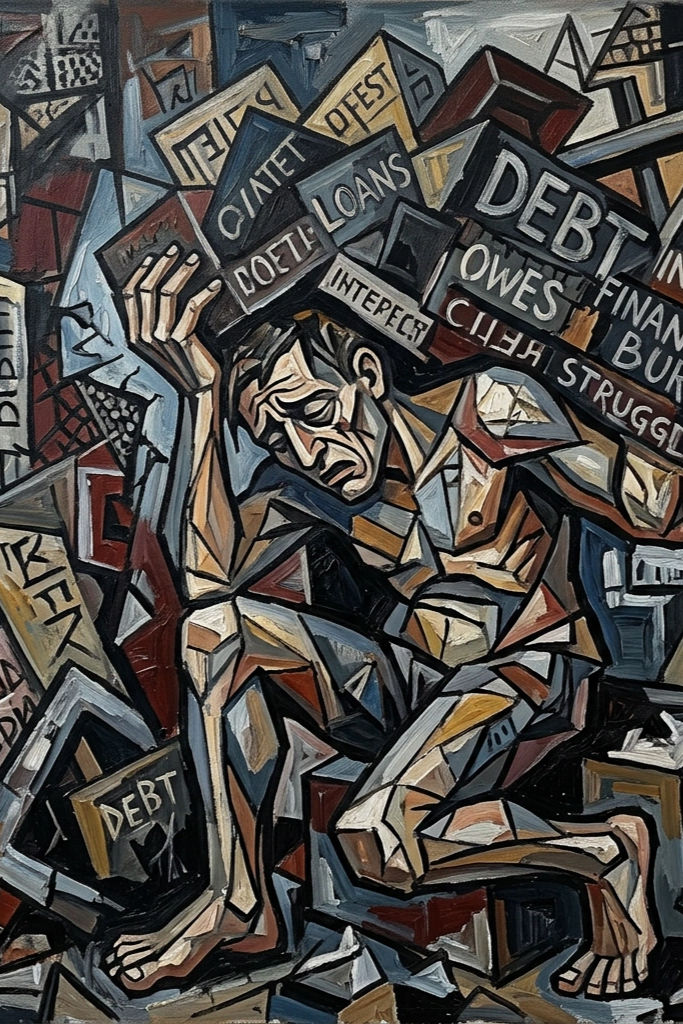

Here's a thought:
maybe the universities that grant the various worthwhile masters degrees might consider granting scholarships, or partial scholarships, to the truly outstanding candidates. Then promising young people might enter professions less encumbered by debt. (In other words, the universities could support some deserving masters candidates, the way they do with PhD students.)
M.Ed. programs are a joke anyway, having watched an ex go through one. Pure credentialism to get more pay for "having a Master's", no benefit apart from that to either teacher or students.
Since the past is only a weak predictor of the future, neither Mr Hess nor anyone else really knows what teachers and other professionals will be able to repay in the future; indeed, if a Democrat following the Biden-Harris administration of student loans wins the next presidential election, student loan affordability may again appear much better than at present, and those renewed expectations may again be dashed in our increasingly unstable world.
In addition to the mentioned nurse anesthetists, there are nurse midwives and nurse practitioners; for which a master’s degree is typically required (in addition to prior nursing experience beyond a bachelor’s degree) and who expand patient access to care. They are practicing professionals; with significant autonomy. For those getting a graduate degree for clinical practice promotions and teaching; not as much, but I am guessing that moving into administration in a hospital or other large institution pays better - admins in any field tend to make sure their needs are met.
New nurses make almost as much as new lawyers in the US. Their salaries certainly aren't far enough apart* to justify a two-fold difference in the sizes of their school loan programs.
* maybe $70,000–$95,000 vs. $70,000–$120,000.